
CO₂ Reduction & Making Your Fleet
More Sustainable
From 1 January 2023, companies with more than 100 employees will be required to provide insight into their employees’ CO₂ consumption. And from 2025, standards will even be introduced for this. But how do you gain that insight?
For smaller organisations looking to achieve ISO certification or reduce their carbon footprint, now is the perfect time to get started!

More than just insight. Get a handle on CO₂ emissions.
It all starts with understanding.
Because no matter how large your fleet is, you will almost always emit CO₂. With upcoming regulations and zero-emission zones on the horizon, it is therefore important that you take action now.
When you drive with TrackJack in your vehicle, we provide a precise overview of how many kilometres you drive. Because we know which car it is, we also know exactly what the associated CO₂ emissions are.
To make your drivers aware of how much influence they have themselves, you can turn it into an internal competition. Each week or month, you’ll receive rankings for each driver, and they’ll compete against one another for the title of Green Driver of the Netherlands.

Record employees’ work-related travel
From 1 January 2023, companies with more than 100 employees will be required to measure and report their CO₂ emissions. This must be recorded in accordance with the Reporting Obligation for Work-Related Passenger Mobility (WPM). From 2026, the government then intends to impose a CO₂ emissions standard for business travel. This should encourage people to opt more often for trains, buses, bicycles and electric cars.
We can help you understand this.
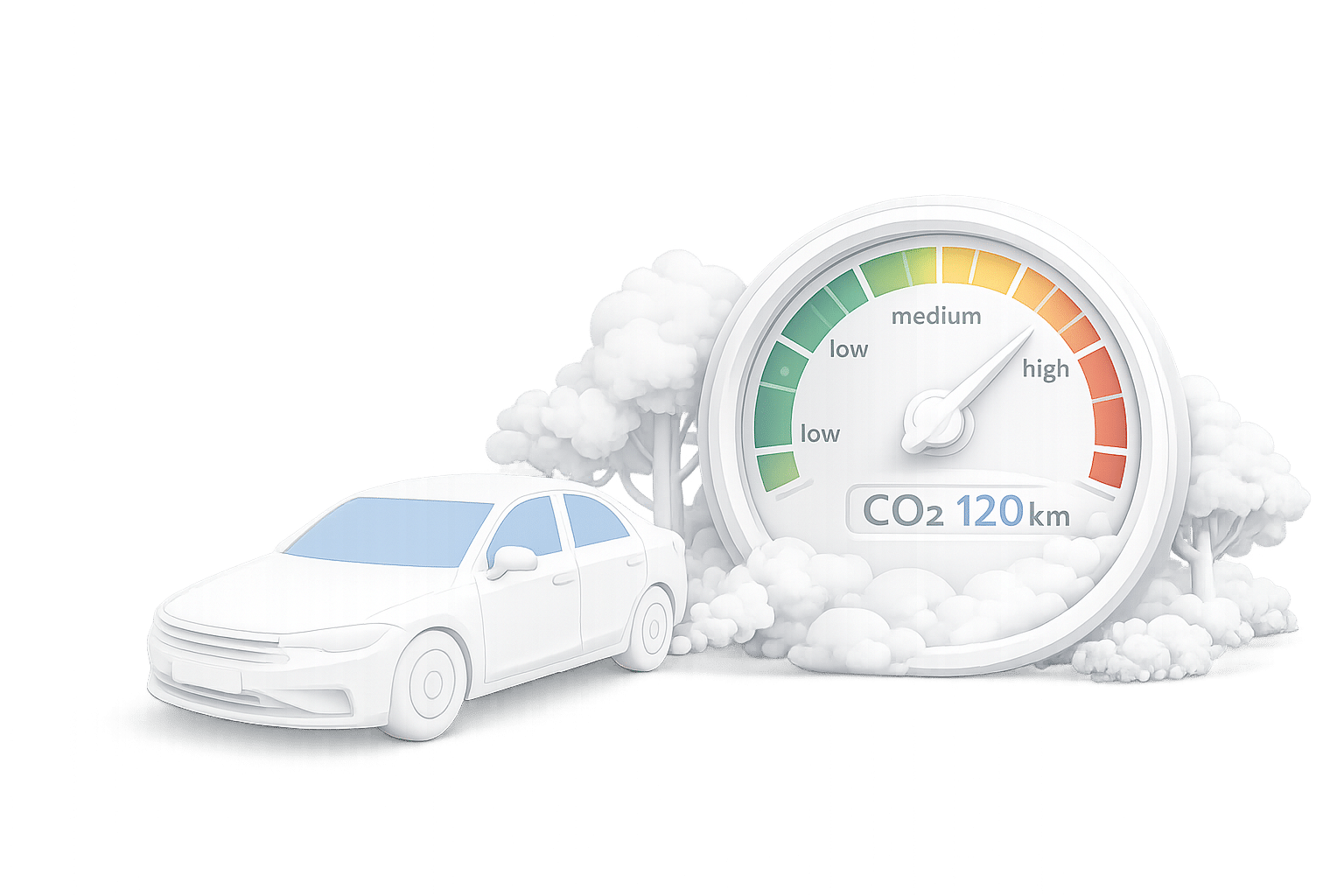
Reporting emissions at fleet level
In addition to the WPM, there is another piece of legislation that will bring about significant changes for vehicle fleets. The Corporate Sustainability Reporting Directive (CSRD) requires companies to maintain reports on social and environmental aspects of their operations, including greenhouse gas emissions. Fleets must therefore focus on low-carbon procurement, decarbonising business travel and supporting environmentally friendly commuting.

Green Driving provides insights for Property Services
Vastgoed Service uses TrackJack Green Driving. This is an extension of their existing journey logging system that provides insights into CO₂ emissions and assesses drivers’ driving behaviour.
“It’s amazing that drivers are asking what they can do to improve. And we really do use the data collected to work more efficiently.” – Peter Pronk.
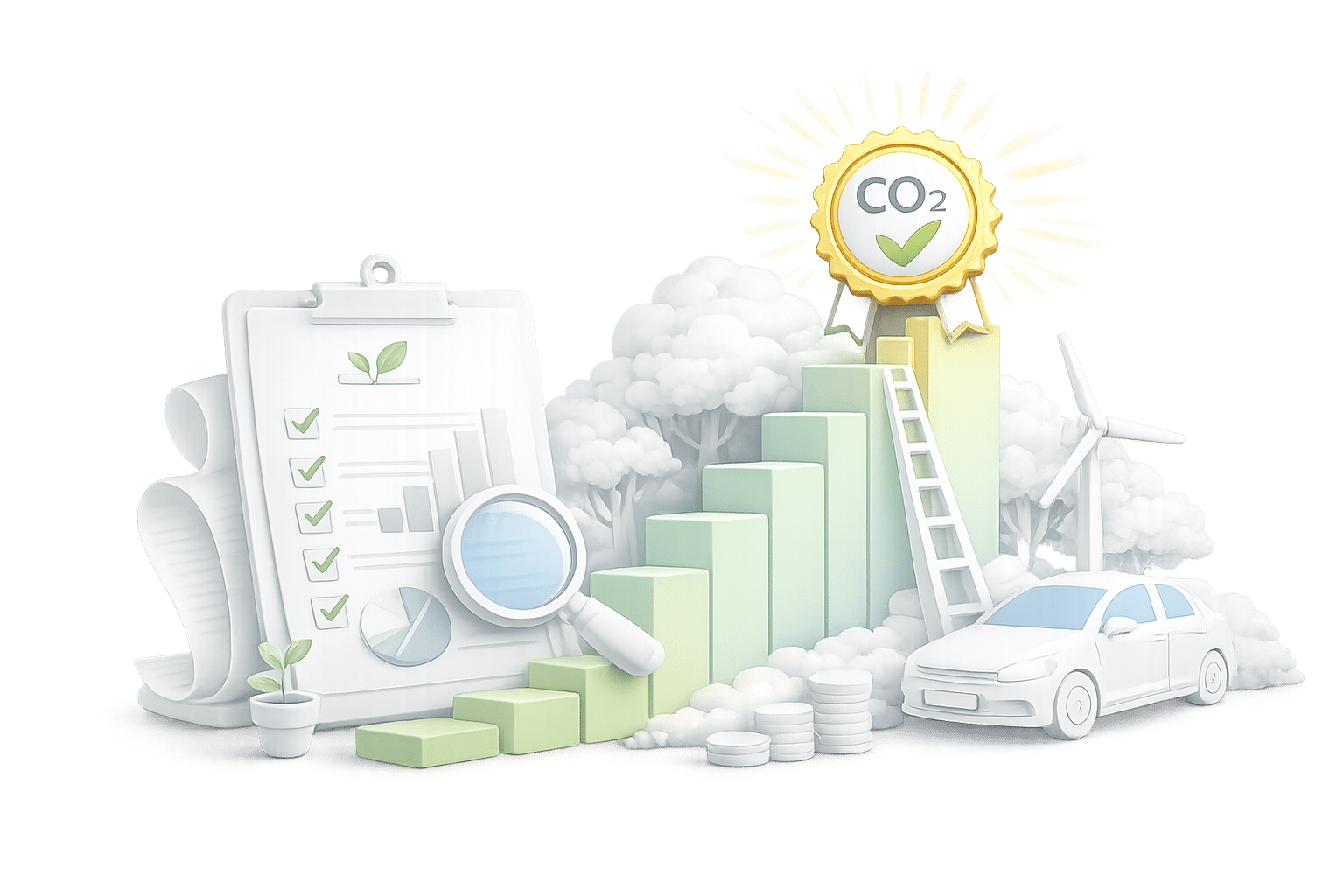
The CO₂ Performance Ladder
Are you already addressing the CO₂ emissions of your business and vehicle fleet?
Or are you about to make your organisation more sustainable? If so, you will almost certainly come across the CO₂ Performance Ladder.
For many organisations, this performance ladder is a requirement to demonstrate that they are working systematically to reduce their CO₂ emissions. There are five different levels at which a company can be certified, each with its own requirements and targets.
In this guide, we’ll show you how the CO₂ Performance Ladder works and exactly what the different levels mean.
Frequently asked questions about reducing CO₂ emissions and making your vehicle fleet more sustainable
Does your organisation need to comply with the reporting requirements for work-related passenger transport? Or do you simply want to get a handle on your fleet’s CO₂ emissions? Here you’ll find answers to the most frequently asked questions.
The WPM requires employers to calculate the CO₂ emissions from business travel and employees’ commutes on an annual basis and to report these figures to the tax authorities. The aim is to provide the government with an overview of total transport emissions in the Netherlands, so that targeted policies can be implemented.
This requirement applies to employers with 100 or more employees. Do you have fewer than 100 employees? In that case, you are not yet required to comply, but it is wise to start now — as standards are becoming stricter and smaller organisations are likely to follow suit later.
You report the total number of kilometres driven by employees for business travel and commuting, broken down by mode of transport and fuel type. Trackjack records this automatically for each vehicle, ensuring you always have access to accurate, exportable data.
You must submit your annual report for the previous year by 30 June. You must therefore submit the data for 2025 by 30 June 2026 using the government’s online form.
Trackjack automatically records the number of kilometres driven by each vehicle, the type of fuel used, and the corresponding CO₂ emissions. You can easily export this data as a PDF or Excel file — ready for your reports. No manual work, no guesswork.
The CO₂ Performance Ladder is a certification scheme that enables organisations to demonstrate that they are systematically working to reduce their CO₂ emissions. It is a mandatory requirement for many tenders and ISO certifications. There are five levels, each with its own set of requirements. Trackjack helps you collect and report the necessary data.
The Corporate Sustainability Reporting Directive (CSRD) is requiring an increasing number of companies to report on social and environmental issues, including greenhouse gas emissions. For vehicle fleets, this means focusing on low-carbon procurement, more sustainable commuting, and understanding emissions per vehicle. Trackjack provides this insight without any extra administrative burden.
With Trackjack Green Driving, drivers gain insight into their own driving behaviour: how fast they drive, how hard they brake and how much fuel they use. You can turn it into an internal competition with weekly or monthly rankings — who will be the Green Driver of the month? This approach has proven to be effective: customers see immediate changes in behaviour and lower fuel costs.
The government plans to introduce a standard for CO₂ emissions from business travel from 2026 onwards. This is intended to encourage companies to opt more often for travel by train, bicycle, bus or electric car. By gaining an understanding of your emissions now, you won’t be caught off guard later — and you’ll be able to make adjustments in good time.