
What GPS tracking means for CSR
Corporate social responsibility (CSR) is high on the agenda for many companies. Especially now that sustainability is becoming more tax-efficient, it is important to use smart tools. GPS tracking and CSR form a powerful combination: it not only helps companies operate more efficiently, but also enables them to achieve their sustainability goals.
Reduced CO2 emissions through driving behaviour analysis
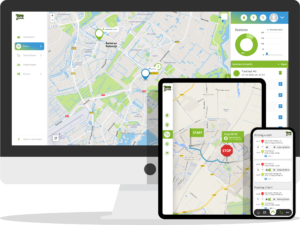
GPS tracking gives you insight into your employees’ driving behaviour. Think of rapid acceleration, unnecessary idling or speeding. By analysing this data, you can provide targeted coaching to drivers to encourage more fuel-efficient driving. This leads to lower fuel consumption and a smaller carbon footprint.
Route optimisation for sustainable fleet management
A key benefit of GPS tracking is the ability to optimise routes. Smart route planning prevents unnecessary mileage, thereby reducing CO2 emissions and lowering your operational costs. This contributes to both CSR and sustainable fleet management.
Reliable CO2 reporting with GPS data
More and more organisations need to be able to demonstrate their environmental performance. GPS tracking provides reliable data for accurate CO2 reporting. Ideal for tenders, certifications or sustainability reports to clients and stakeholders.
Transparency in mileage recording
Accurate mileage records are essential for correct reimbursement and tax clarity. With GPS tracking, you automatically record all kilometres driven. This provides transparency for both employer and employee and prevents disputes over unclear journeys. Read more about TrackJack’s automatic journey recording.
GPS tracking and the WPM reporting obligation
Since 2024, companies with 100 or more employees have been required to report annually on the business travel behaviour of staff under the Passenger Transport and Environment Act (WPM). GPS tracking makes collecting this data simple and reliable. TrackJack automatically generates the reports you need for your CO2 reporting.
Conclusion: GPS tracking and CSR reinforce each other
GPS tracking is much more than just a logistics tool. With a TrackJack solution, you not only improve the efficiency of your fleet, but also make a tangible contribution to corporate social responsibility. GPS tracking and CSR go hand in hand – a smart investment in sustainability.
Frequently asked questions: GPS tracking and CSR
How does GPS tracking help reduce CO2 emissions?
By providing insight into driving behaviour such as rapid acceleration and speeding, you can coach drivers towards more fuel-efficient driving. Lower fuel consumption means lower CO2 emissions per kilometre driven.
Can I use GPS data for my sustainability reporting?
Yes. TrackJack generates reliable reports on kilometres driven, CO2 emissions and driving behaviour per vehicle and per employee. Ideal for internal reporting, tenders or certifications.
Does the WPM reporting obligation also apply to our company?
The obligation applies to companies with 100 or more employees. They must report annually on business travel and commuting. GPS tracking makes collecting this data considerably easier.
Does GPS tracking also help with fleet optimisation?
Yes. By gaining insight into routes, driving times and vehicle usage, you can deploy your fleet more efficiently, avoid unnecessary mileage and reduce operational costs.
More sustainable business practices with GPS tracking?
TrackJack gives you insight into driving behaviour, CO2 emissions and mileage. Ideal for CSR reporting, fleet management and the WPM requirement.
Related knowledge base articles
- Everything about GPS tracking
- How does GPS work?
- TrackJack’s automatic journey logging
- Car GPS tracker: costs and benefits
- Exporting journey logs to PDF or Excel
- Tax Authority record retention period
- Keeping track of mileage: everything you need to know